


 English
 中文簡體
中文簡體news
Home / News / Industry News / Why Is Single Screw Barrel Technology the Secret to Smarter Plastic Extrusion?
Author: WeiBo
Date: Jan 15, 2026
Why Is Single Screw Barrel Technology the Secret to Smarter Plastic Extrusion?
Content
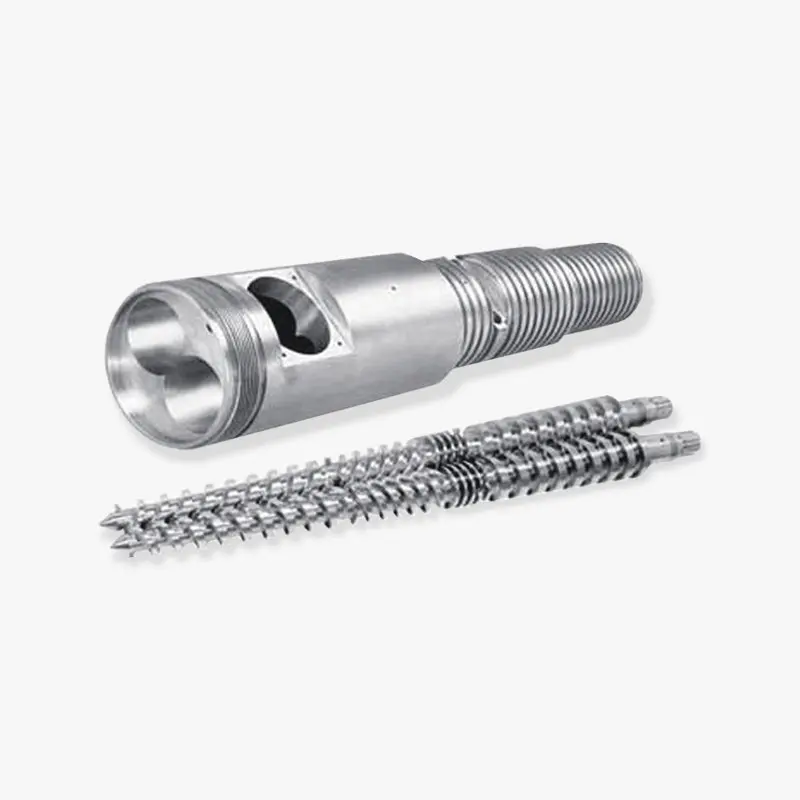
In the fast-evolving world of manufacturing, efficiency is no longer just a goal—it is a requirement for survival. As industries from construction to food packaging look for ways to streamline their operations, one specific component has emerged as a cornerstone of modern production: the Single Screw Barrel for Extruder.
While it might seem like a niche piece of industrial hardware, the evolution of the single screw barrel represents a significant leap forward in modular engineering and intelligent automation. Today, we take a deep dive into why this technology is capturing the attention of plant managers worldwide and how it is solving the most common headaches in the extrusion industry.
The Shift Toward Modular Design: Why "Quick-Change" Is Winning
For decades, the traditional extruder barrel was seen as a static, heavy-duty part of the machinery. If one section wore out or became clogged, the entire production line would often grind to a halt for days. Maintenance was a labor-intensive nightmare, requiring specialized teams and significant downtime.
The latest generation of Single Screw Barrel for Extruder products has completely flipped this script. By adopting a modular design, manufacturers have introduced a level of flexibility previously unseen in the field.
Reducing Maintenance Difficulty and Costs
The beauty of modularity lies in its simplicity. Instead of treating the barrel as one monolithic piece, the design allows for the quick replacement of specific components. If a specific zone of the barrel experiences higher wear due to the abrasive nature of a particular polymer, that section can be swapped out without replacing the entire unit.
-
Speed: Repairs that used to take a full shift can now be completed in a fraction of the time.
-
Cost-Efficiency: Companies no longer need to invest in an entirely new barrel when only one part is compromised.
-
Inventory Management: Facilities can keep specific modular spares on hand, reducing the need for massive storage spaces for full-length barrels.
This shift directly improves overall equipment utilization. When the machine spends less time in the "repair" phase and more time in the "production" phase, the return on investment (ROI) for the manufacturer skyrockets.
Intelligence at the Core: The Rise of Smart Extrusion
It isn't just the physical hardware that is changing; it is the "brain" behind the machine. Modern extrusion processes are increasingly being driven by intelligent control systems. Historically, operating an extruder required a high level of manual "artistry"—operators had to manually adjust temperatures, screw speeds, and pressures based on feel and experience.
The new intelligent systems have simplified this process significantly:
-
Reduced Manual Intervention: Automated sensors monitor the state of the material inside the barrel in real-time. If the temperature fluctuates by even a single degree, the system corrects itself instantly.
-
Improved Production Efficiency: By maintaining a perfectly consistent environment within the barrel, the system ensures that the output is uniform. This reduces "scrap"—the wasted material that occurs when a batch doesn't meet quality standards.
-
Enhanced Management Levels: These systems collect data. Managers can now look at digital dashboards to see exactly how much material was processed, the energy consumed, and when the next maintenance cycle should occur.
By simplifying the operation, companies can mitigate the risks associated with the global skilled labor shortage. You no longer need a 30-year veteran to oversee every minute of the process; the intelligent system acts as a digital co-pilot.
Versatility Across Materials: One Solution for Many Industries
A common question among procurement officers is: "Can this barrel handle my specific material?" Whether it is PVC for piping, PE for film, or more complex recycled plastics, the modern Single Screw Barrel for Extruder is built for versatility.
The extrusion process is used in a staggering variety of industries, including:
-
Construction: Producing robust pipes, window frames, and insulation.
-
Packaging: Creating the films and sheets used to keep food fresh.
-
Automotive: Manufacturing weather stripping and interior components.
-
Medical: Crafting precision tubing for life-saving equipment.
The ability to process various materials with a single, reliable barrel setup means that manufacturers can pivot their production lines to meet market demands without purchasing entirely new machinery. This adaptability is crucial in a global economy where consumer trends change overnight.
Beyond the Hardware: The Importance of a Full-Service Partner
Buying a high-quality barrel is only half the battle. The most successful projects are those backed by a comprehensive service model. Industry leaders are no longer just "selling a product"; they are providing a complete customized solution.
From Selection to Installation
Choosing the right Single Screw Barrel for Extruder involves more than just picking a size. It requires an analysis of the specific polymers being used, the desired output rate, and the existing machinery constraints. A dedicated partner walks the customer through:
-
Equipment Selection: Matching the screw geometry to the material's viscosity.
-
Installation & Debugging: Ensuring the barrel is perfectly aligned and the control systems are calibrated to the local power grid and environment.
-
After-Sales Service: Providing ongoing technical support to ensure the project remains on track for years, not just weeks.
This "end-to-end" approach ensures that the transition to new technology is smooth and that the customer is never left to figure out complex mechanical issues on their own.
Looking Forward: The Future of Extrusion
As we look toward the end of the decade, the focus on sustainability and "Industry 4.0" will only intensify. The Single Screw Barrel for Extruder will continue to evolve, likely incorporating even more advanced materials (like specialized alloys for extreme wear resistance) and even deeper integration with AI-driven factory clouds.
The goal remains the same: to make manufacturing cleaner, faster, and more affordable. By investing in modular designs and intelligent controls, companies are not just buying a piece of metal; they are investing in the future of their production capacity.
In conclusion, the modern single screw barrel is the "unsung hero" of the industrial world. It is a perfect example of how traditional mechanical engineering and modern digital intelligence can come together to solve real-world problems. Whether you are a small local manufacturer or a global industrial giant, the benefits of upgrading to a high-efficiency, modular barrel system are clear.
Share:
Selected Bearing Display


 浙公網(wǎng)安備33090202000520號